Defining Characteristics: Wind and Fog
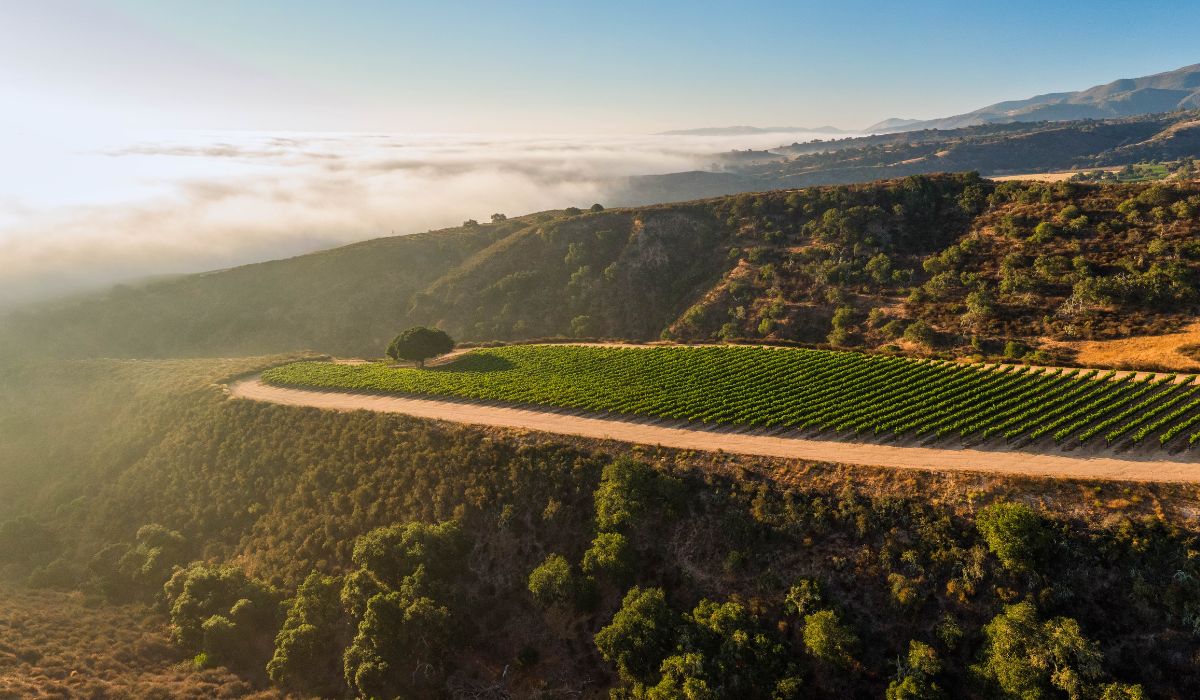
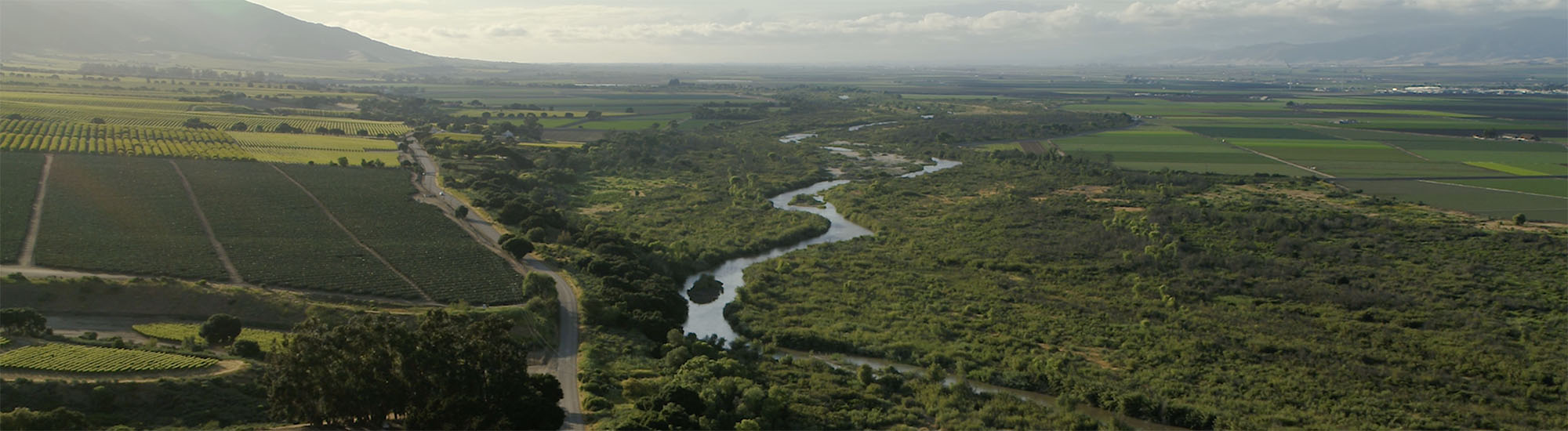
The vineyards in the appellation sit on a narrow band of land along the base of the Santa Lucia Mountains, overlooking the Salinas Valley below. It is ideally suited to cool-climate grape varietals thanks to its close proximity to Monterey Bay. Just offshore lies the Blue Grand Canyon, one of the deepest submarine canyons in the world. Its frigid waters are home to diverse marine life and serve as the engine that drives our climate.
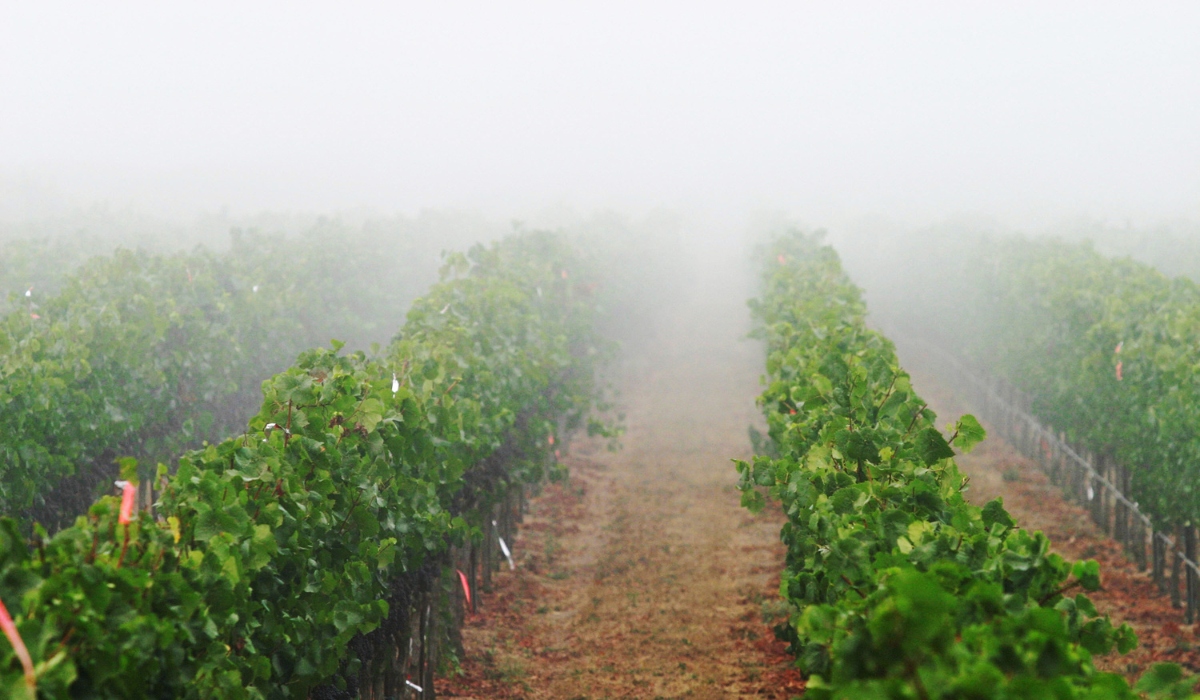
Each evening, cool air and fog move inland from the Bay, blanketing the vineyards before retreating by late morning. This natural pattern means the northern reaches of the appellation often receive one to two additional hours of fog each day. In the early hours, the fog can be so dense that the vines are beaded with moisture by morning. Shake the canopy and cold droplets fall to the ground and onto your boots as the day begins.
Wind is another defining force. Each afternoon, warm air rising from the Central Valley pulls cool marine air inland, with the coastal mountain valley acting as a funnel that channels steady winds of up to 25 mph. The wind is a constant presence here, strong enough that afternoon barbecues, ball games, or even conversation can be overtaken by the wind. In the vineyards, these winds help reduce disease pressure, deter pests, and encourage precise irrigation. They also slow photosynthesis, extending the growing season. Over time, this encourages thicker berry skins that translate to depth, structure, and aromatic intensity in the wines.
For Nick, the influence is unmistakable. “People often focus on the soil beneath, but to me, the persistent fog and wind are the defining characteristics that shape our wines on a daily basis.”
Rainfall here is minimal, averaging just 13 inches annually, far less than many other coastal Pinot Noir regions. When heavier rain events do occur, water drains naturally down the slopes, leaving vineyards unaffected while the Salinas River absorbs the runoff. Combined with well-draining soils, these conditions promote deep root systems and allow us to irrigate vines with exactly what they need and when they need it.
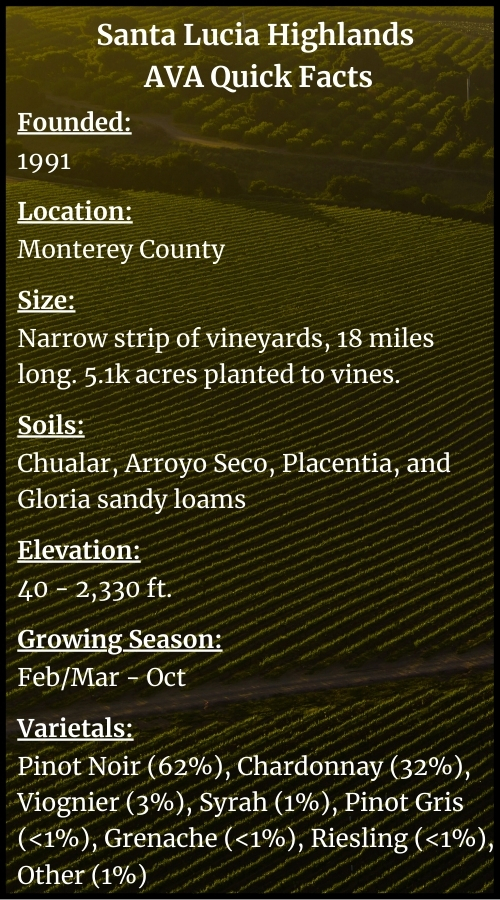
Together, these elements contribute to one of the longest growing seasons in California. Early flowering and late harvest stretch the season up to a month longer than most Pinot Noir regions. This extended ripening period allows flavors to develop slowly without rapid sugar accumulation, while retaining the natural acidity that defines wines from the Santa Lucia Highlands.